Private Mole Checks, Dermoscopy & Mole Removal in Haywards Heath and Peacehaven
Comprehensive Skin Cancer Screening, Full-Body Mole Checks and Minor Skin Surgery with Dr Ronak Patel
Early identification of suspicious skin changes is an important part of maintaining healthy skin.
Dr Ronak Patel offers comprehensive private mole checks, dermoscopic examinations and mole removal at Facial Aesthetics Centre in Haywards Heath and his Monday skin clinic in Peacehaven, East Sussex.
With a background in surgery and extensive experience in general practice, Dr Patel provides a thorough, personalised approach to assessing moles and other skin lesions.
Comprehensive Full-Body Mole Checks – Head to Toe
A full-body mole check involves a systematic examination of your skin from head to toe, including areas that can be difficult to examine yourself.
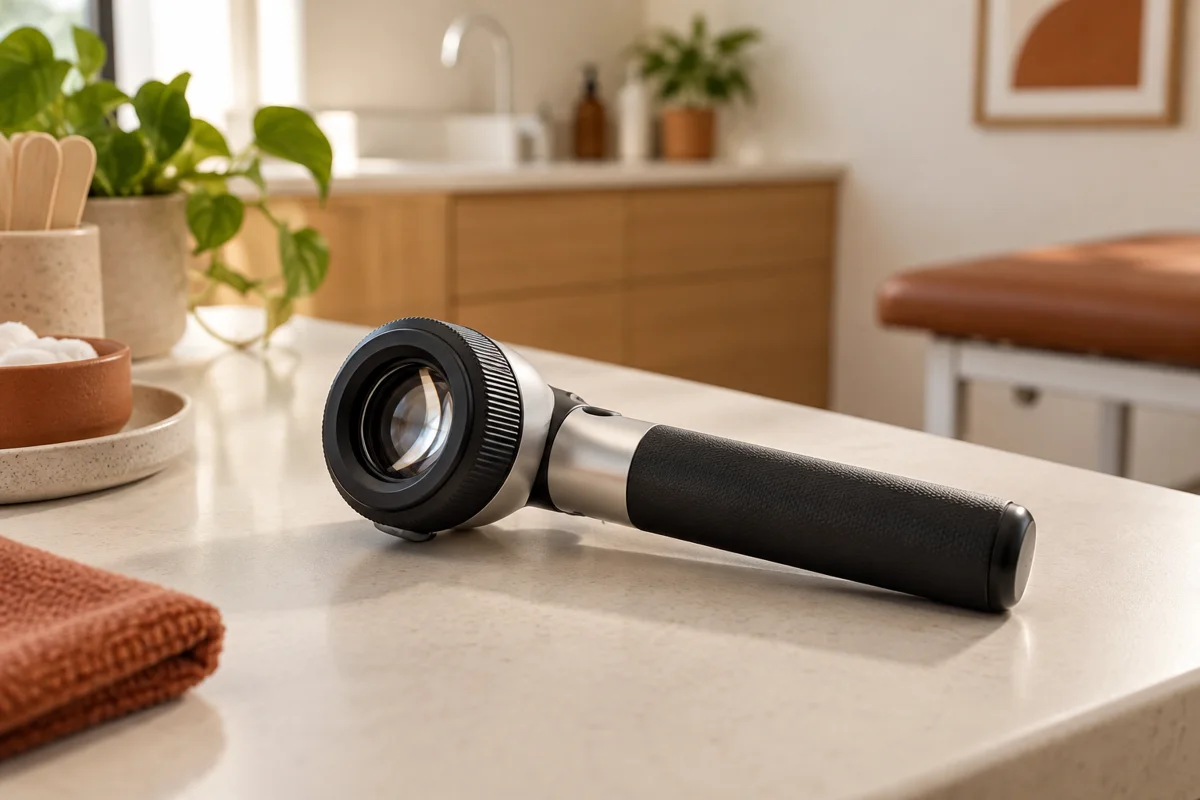
Dr Patel uses a dermatoscope, a specialised magnifying instrument that allows detailed examination of structures and pigmentation beneath the skin’s surface that cannot be seen clearly with the naked eye.
Where appropriate, dermoscopic photographs can also be taken, providing a useful visual record of individual moles and allowing comparison during future assessments.
Your consultation includes:
- A comprehensive head-to-toe skin examination
- Detailed dermoscopic assessment of moles and pigmented lesions
- Photographic documentation of selected moles where appropriate
- Assessment of any new, changing or concerning skin lesions
- Personalised advice on skin health, sun protection and future monitoring
- Discussion of mole removal or specialist referral where clinically indicated
The aim is to provide a careful, professional assessment, helping identify concerning changes early and offering reassurance where appropriate.
How Often Should You Have Your Moles Checked?
Dr Patel recommends considering an annual professional full-body mole check, particularly for patients with multiple moles, significant sun exposure or a family history of skin cancer.
Some individuals may benefit from more frequent assessments depending on their personal risk factors and clinical findings.
Alongside professional examinations, Dr Patel encourages patients to check their own skin once a month.
Regular self-examination helps you become familiar with your moles and recognise any new or changing lesions between appointments.
Importantly, you should never wait until your next annual appointment if you notice a concerning change.
When Should You Have a Mole Examined?
Arrange a medical assessment if you notice:
- A mole changing in size, shape or colour
- An irregular or unusual-looking mole
- A mole that bleeds, crusts, itches or becomes painful
- A new or changing pigmented lesion
- A mole that looks noticeably different from your others
- A skin lesion that is not healing
The ABCDE guide can help identify potentially concerning changes:
A – Asymmetry: One half looks different from the other.
B – Border: Irregular, blurred or uneven edges.
C – Colour: Variation in colour or unusual pigmentation.
D – Diameter: Larger lesions may warrant assessment, although melanomas can be smaller than 6 mm.
E – Evolving: Any noticeable change in appearance or symptoms.
Not all suspicious lesions follow these patterns, so professional assessment is important whenever you have concerns.
Private Mole Removal and Minor Skin Surgery
Following a clinical and dermoscopic assessment, Dr Patel can advise whether a mole is suitable for removal.
For appropriately assessed benign moles, removal may be considered for cosmetic reasons, repeated irritation or discomfort.
Depending on the type, size and location of the lesion, treatment options may include:
Shave Excision
A technique suitable for selected benign, raised moles, where the lesion is carefully removed from the skin surface under local anaesthetic.
Surgical Excision
Removal of the lesion using a minor surgical procedure under local anaesthetic, usually followed by stitches.
Dr Patel will explain the most appropriate technique, expected healing, potential scarring and whether laboratory analysis is required.
Any mole suspicious for melanoma or another skin cancer requires appropriate specialist assessment and management rather than routine cosmetic removal. Urgent referral will be advised where indicated.
What Happens During Your Mole Check?
1
Your appointment begins with a discussion about your skin concerns, relevant medical history, previous sun exposure and any personal or family history of skin cancer.
2
Dr Patel then performs a careful skin examination using dermoscopy, with photographs taken where clinically appropriate.
3
You will receive a clear explanation of the findings, including whether a lesion appears reassuring, requires monitoring, needs further investigation or should be referred for specialist assessment.
Histology and results
Where appropriate, the tissue is sent to a laboratory for analysis. Dr Patel reviews the report and explains the result to you personally.
Scarring and recovery
Every procedure leaves a mark. Dr Patel plans the incision to keep scarring as small as possible and will talk through what to expect for your skin and the site of the lesion.
Frequently Asked Questions
Are dermoscopic photographs taken during mole checks?
Yes. Where appropriate, Dr Patel can take dermoscopic photographs of individual moles to document their appearance and assist with future comparisons.
Can I have every mole checked?
Yes. A comprehensive full-body skin examination assesses moles and other visible skin lesions from head to toe.
How often should I have a full-body mole check?
Dr Patel generally recommends considering an annual examination, with more frequent monitoring for patients at increased risk where clinically appropriate. Monthly self-examination is also encouraged.
Can benign moles be removed?
Yes. Following assessment, suitable benign moles can be removed using shave excision or surgical excision, depending on their characteristics and location.
Will mole removal leave a scar?
All surgical skin procedures carry a risk of scarring. Dr Patel will discuss the likely cosmetic outcome, healing process and potential risks before treatment.
Book Your Private Mole Check
Whether you are concerned about an individual mole, would like a comprehensive head-to-toe skin examination or are considering benign mole removal, Dr Patel provides personalised assessment and minor skin surgery in a professional clinical setting.
Haywards Heath: Facial Aesthetics Centre, 2 The Broadway, Haywards Heath, RH16 3AH
Peacehaven: Monday Skin Clinic, Peacehaven, East Sussex
To arrange an appointment, contact Facial Aesthetics Centre on 01444 620182 or submit an online appointment enquiry.
At a glance
Where
Haywards Heath and Peacehaven
Anaesthetic
Local
Stay
Home the same day
Stitches
If used, removed after 7–14 days
Histology
Where appropriate
Fee
Quoted after assessment
Scarring and Recovery After Minor Skin Surgery
Related guide